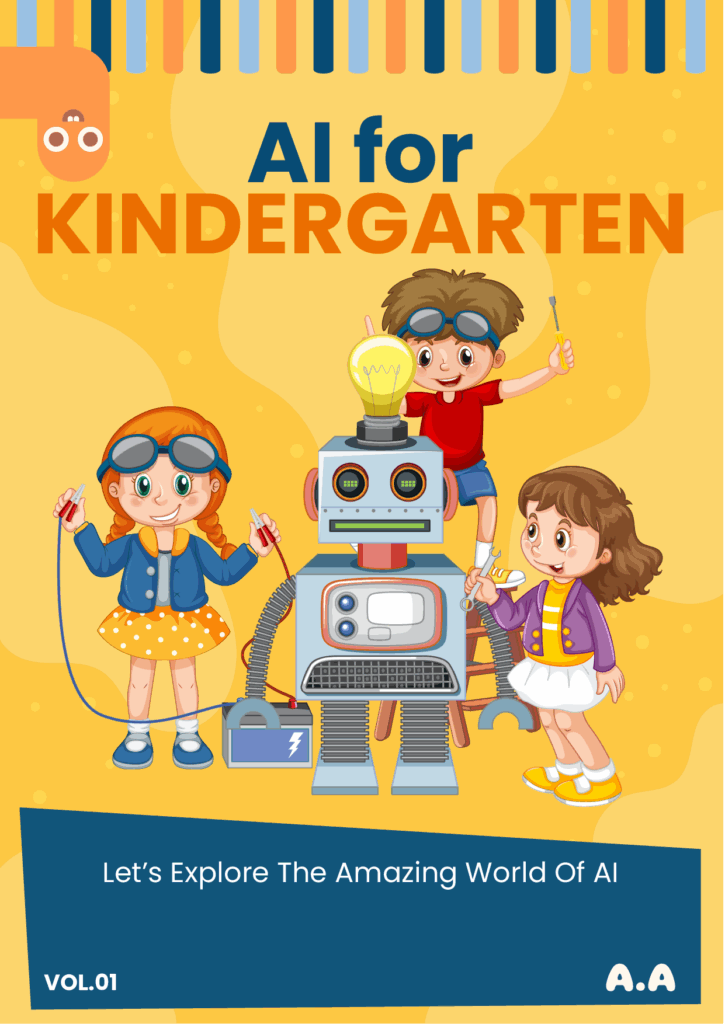
 Exploring AI Through Play and Senses Children are introduced to AI by identifying smart machines around them, recognizing voice assistants, and interacting with simple AI tools like Teachable Machine and animated stories. The emphasis is on awareness and curiosity-building.
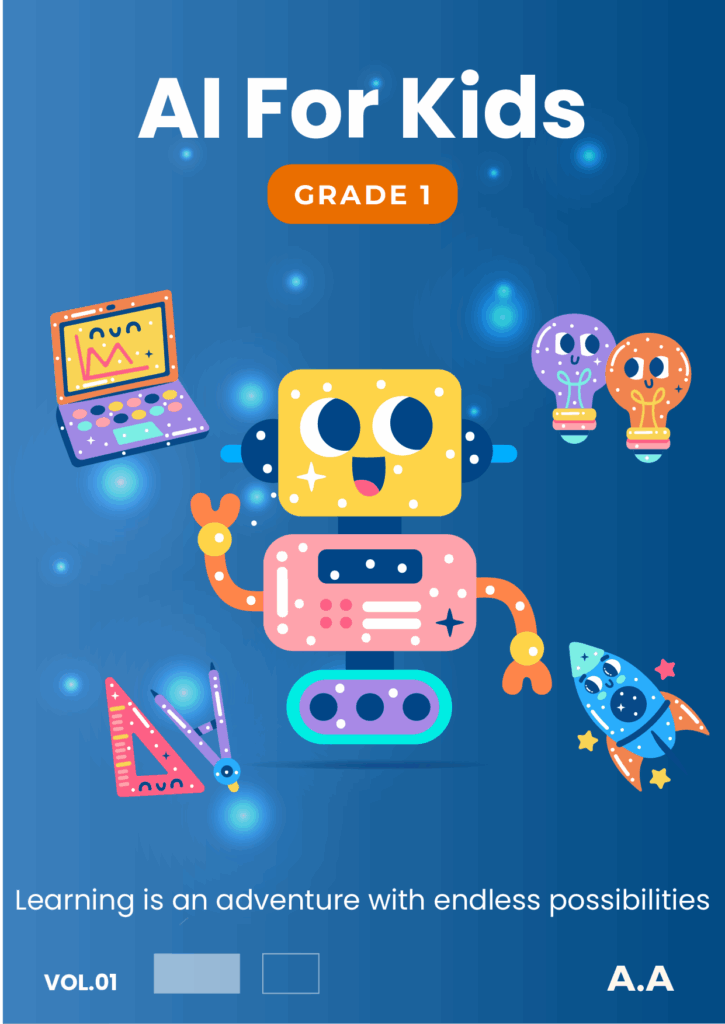
 Understanding How AI Learns and Feels Students begin to grasp how AI processes visuals and emotions. They use Scratch Jr to create interactive stories and design their first animated characters, exploring emotional intelligence and digital safety through hands-on AI games.
 Training AI with Patterns and Logic Learners go deeper into logic and pattern recognition, simulating AI games and chatbots. They explore how robots can be trained to respond and act, focusing on fair AI and emotional responses in tech (e.g., smart toys and AI pets).
 Programming Smart Solutions with AI With tools like Scratch and basic coding platforms, students start building smarter bots. They explore recommender systems, speech recognition, and privacy while using sensors to understand how AI collects and uses data.
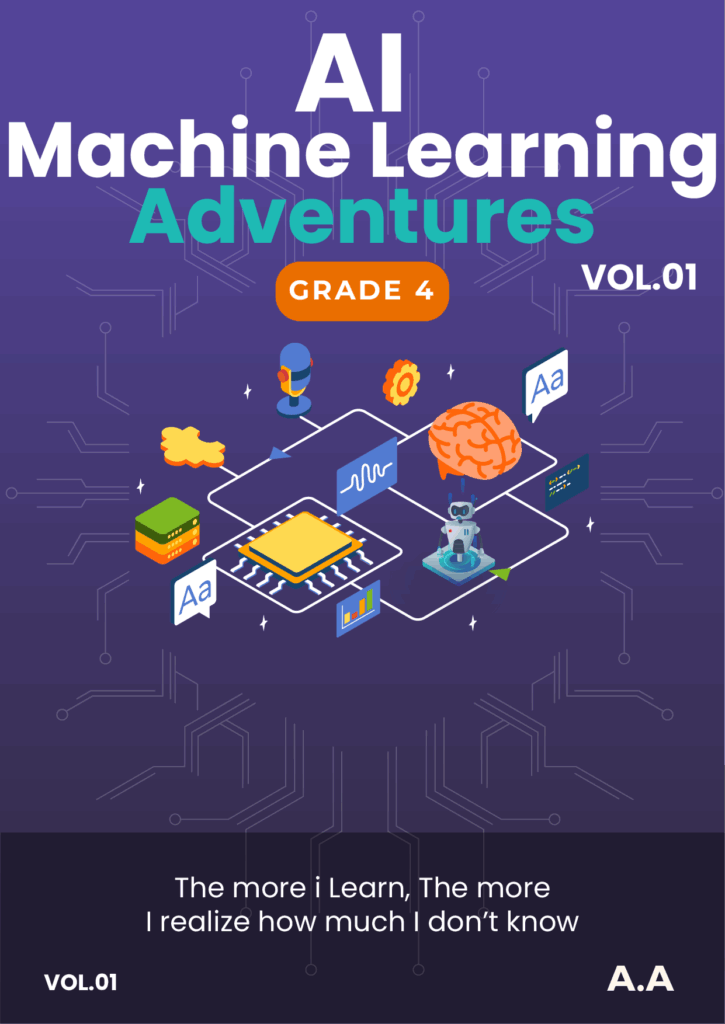
 Learning How AI Thinks: Machine Learning Basics Students dive into machine learning and predictive algorithms, explore computer vision, and simulate emotion AI. They also begin working on healthcare-related projects and learn how AI makes decisions using data.
 Real-World AI Applications and Creative Expression AI is explored through transportation, creative arts, and IoT systems. Students use real-world tools to build projects and simulate ethical dilemmas, learning how AI can both help and harm if not responsibly designed.
 Blockchain, Crypto & Generative AI Integration This grade introduces the intersection of AI and digital finance (blockchain, smart contracts, cryptocurrency) and Generative AI tools like image and text creators. Ethical concerns around bias and responsible innovation are highlighted.
Neural Networks, Animation & Voice AI Students explore the basics of neural networks, data analysis, and voice assistant AI (like Alexa/Siri). They apply AI in animations and digital law scenarios while considering ethical use of data and mental wellness technologies.
 Empathy, Startups, and Sustainability in AI Deep learning tools are used to build empathy-driven AI, explore smart city design, and create early versions of Web3 apps. AI’s role in global challenges like sustainability is integrated into design thinking projects.
 AI Governance, NLP, and Media Influence Advanced concepts like Natural Language Processing, AI in media, and blockchain applications are introduced. Students debate AI governance and ethics and begin building capstone proposals with AI for social good.
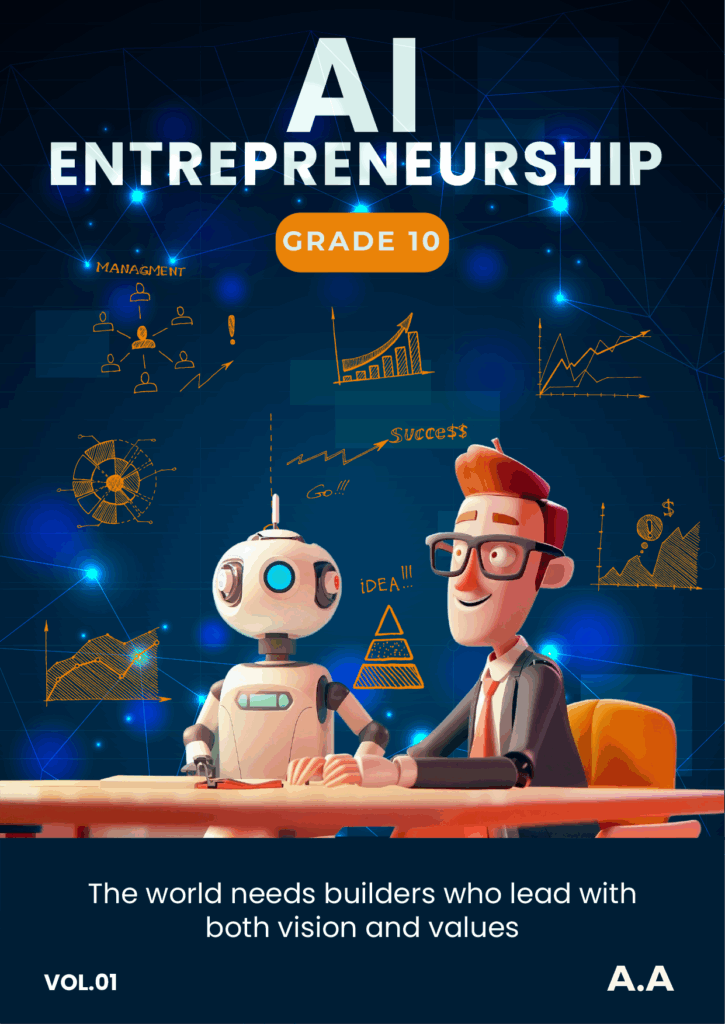
 AI Startups, Public Debates, and Web3 Students pitch AI startup ideas, simulate blockchain-based voting systems, and debate AI policy and careers. Capstone projects grow in complexity, with students choosing global AI themes for research and innovation.
 Capstone Leadership and Launching AI Careers This final stage sharpens career readiness by building Minimum Viable Products (MVPs) with AI, creating pitch decks, and leading policy reviews. Students present projects on Demo Day, showcasing AI’s role in leadership, ethics, and impact.
AI Startups, Public Debates, and Web3 Students pitch AI startup ideas, simulate blockchain-based voting systems, and debate AI policy and careers. Capstone projects grow in complexity, with students choosing global AI themes for research and innovation.